
Your Essential Puppy Go Home Day Checklist

Go home day always sneaks up faster than families expect! We put this puppy go home day checklist together so that the whole day feels joyful instead of frantic. It covers what to bring with you, how to handle the drive, and what those first two days at home really look like.
The Week Before

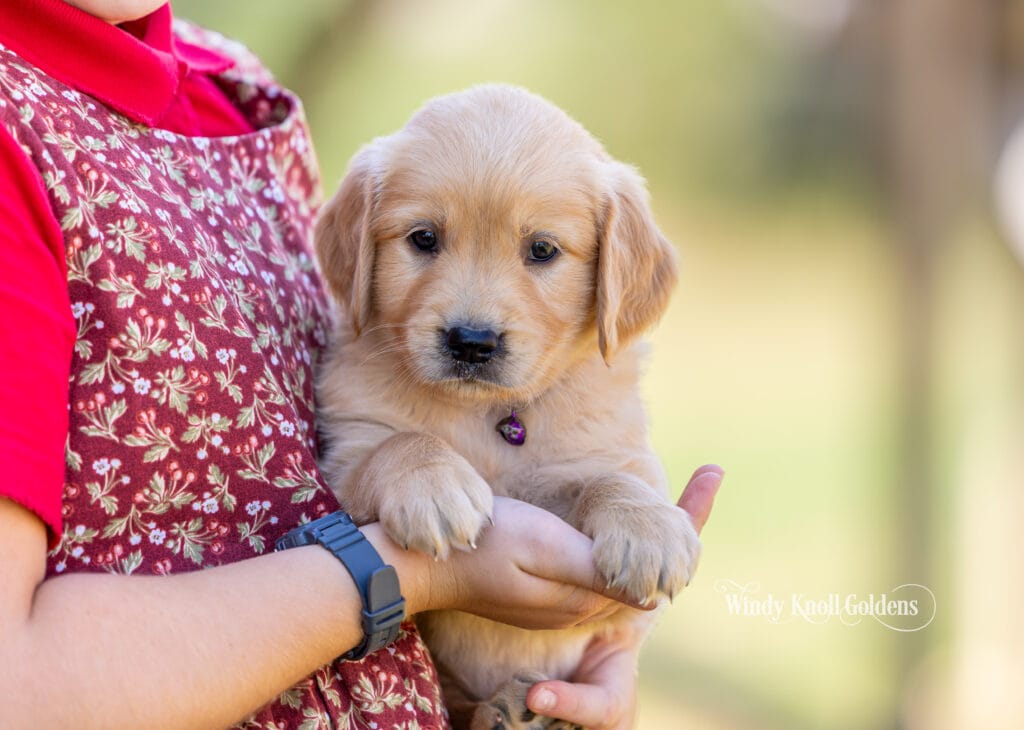
Most of a puppy go home day checklist happens before the day itself, and the families who enjoy pickup day the most are the ones who did these four things in the week beforehand.

  • Choose your vet and book the first appointment. Most families are asked to have a puppy seen within a few days of pickup, and good practices book out.
  • Set up the crate before the puppy arrives. A crate that appears on day one is a normal part of the house. A crate that appears on day four is a punishment.
  • Puppy proof one room. You do not need the whole house ready. You need one safe space where a puppy can be loose and unsupervised for two minutes.
  • Buy the food your breeder is feeding. Our puppies are raised on Wholesomes, so that is what we send them home on and what we would have you buy before pickup day. Changing food and changing homes in the same week is how you end up cleaning the floor at two in the morning.

Your Puppy Go Home Day Checklist For The Car

  • A crate or a secured carrier, which is safer than a lap and far safer than a loose puppy
  • An old towel or blanket, plus a spare
  • Paper towels, wipes, and a bag for anything unpleasant
  • A small bowl and water for any trip over an hour
  • A collar and a lightweight leash
  • Your paperwork folder for the records your breeder sends home

The Drive Home

Keep it calm and keep it boring. A puppy leaving its litter for the first time does better with quiet company than with a car full of excitement. If the drive runs long, stop every couple of hours in a grassy spot away from where other dogs gather, since a puppy is not fully covered by vaccines yet. Expect some crying, and expect it to pass.
The First Evening

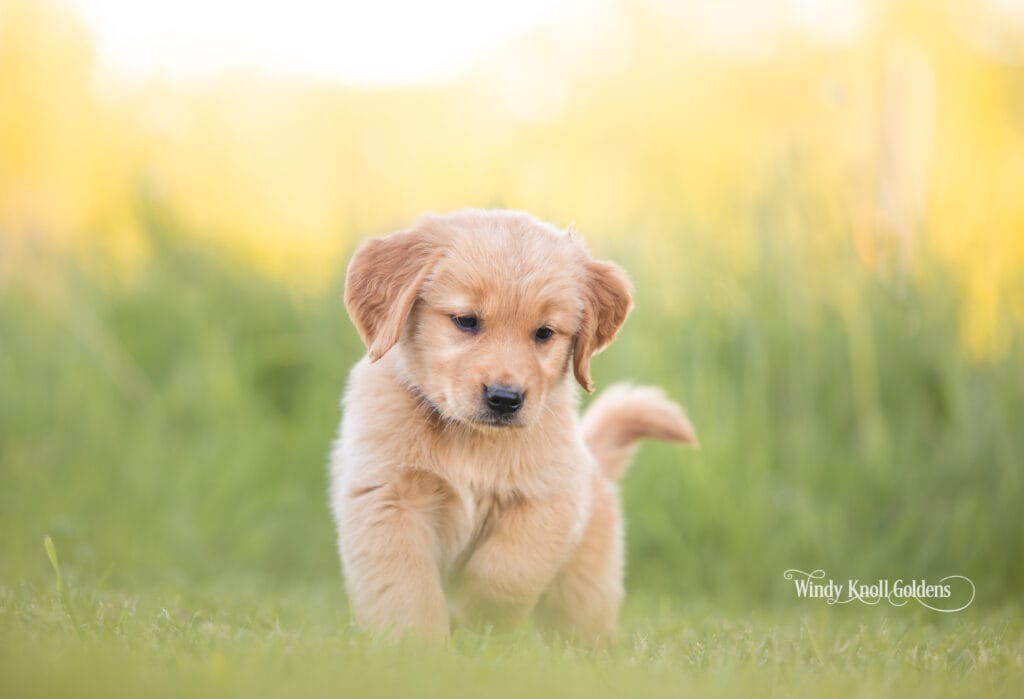
Take the puppy straight to the spot in the yard you want it to use, and wait. Praise what happens there. Then keep the evening small. One room, the immediate family, a meal, and an early bedtime. Every neighbor who wants to meet the puppy can meet it next week, and the puppy will be far better company for having had a quiet start.

The First Night

Put the crate beside your bed. A puppy that can hear you and smell you settles far faster than one shut in a distant room, and you will hear the wake up that means it needs to go out rather than the one that means it is lonely. Plan on one or two trips outside overnight for the first week or so. It gets better quickly.
The First 48 Hours

  • Outside constantly. After waking, after eating, after play, and every hour in between while you are learning each other.
  • Keep meals on the breeder’s schedule for the first several days, then adjust to your own.
  • Expect a soft stool or two. New water, a new house, and a long day will do that. Blood, repeated vomiting, or a puppy that will not eat at all is a call to the vet, not a wait and see.
  • Let the puppy sleep. Puppies this age need a great deal of it, and an overtired puppy behaves like a small crocodile.
  • Start naming things. The name, the crate word, the going outside word. Consistency from hour one is worth weeks of training later.

When To Call Us

Any time. That is the one line of the puppy go home day checklist that never expires. The questions that matter most usually turn up in week two or three, long after the excitement of go home day has worn off, and we would far rather hear from you early than late. Families still waiting on their puppy can follow along on our current litters page, and anyone at the beginning of the process can start on our reserve a puppy page. For general breed background, the American Kennel Club golden retriever profile is a useful reference to keep handy.

Share the Post:

Leave a Reply

Your email address will not be published. Required fields are marked *