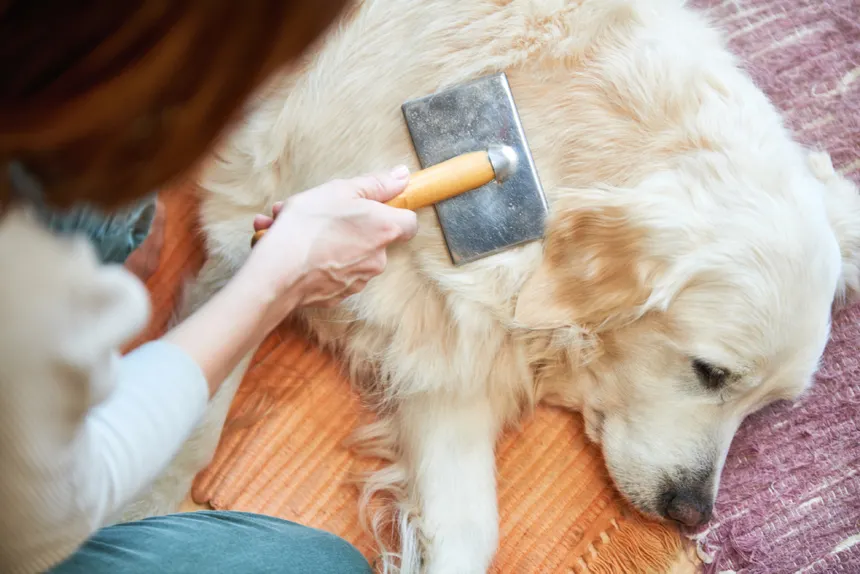


If you’ve ever owned a Golden Retriever, you already know Golden Retriever shedding intimately — usually because you’re picking it off your couch, your car seats, your dinner plate, and that one black sweater you really shouldn’t have worn today. So why do Golden Retrievers shed so much? And more importantly, what can you actually do about Golden Retriever shedding? The good news: this kind of shedding is completely normal, totally manageable, and there’s a real science behind it. Here’s everything you need to know!
The simple answer: Golden Retrievers have a double coat, and that double coat is the root cause of all Golden Retriever shedding.
That double coat is the secret behind their gorgeous, weather-resistant fur — and it’s also the reason your vacuum cleaner is working overtime. According to the American Kennel Club’s Golden Retriever breed standard, Goldens were originally bred in the Scottish Highlands as waterfowl retrievers, and that thick, water-repellent coat was essential for working in cold lakes and rough terrain.
Here’s how the double coat works:
It’s that thick undercoat that’s causing all the trouble in your living room. Goldens shed their undercoat in significant quantities, and unlike single-coated breeds, they’re constantly cycling through hair growth, transition, and shedding phases.
This is why even with weekly brushing, you’ll still find Golden hair in places you didn’t even know existed. Welcome to the club.

Goldens shed lightly all year long, but they have two major Golden Retriever shedding events each year — and if you’ve never lived through one, brace yourself.
In spring, your Golden sheds out their thick winter undercoat to make way for a lighter summer coat. This typically happens between March and May, depending on your climate. (At Windy Knoll Goldens here in Maine, it tends to run a little later — sometimes well into May.)
In fall, the lighter summer coat sheds out and a denser, warmer winter coat grows in. This usually happens between September and November.
During these “coat blowing” periods, you’ll see hair come out in tufts and clumps. It looks alarming the first time you witness it. It’s completely normal. The Golden Retriever Club of America confirms that this seasonal shedding is part of the breed’s natural cycle.
Golden Retrievers are considered moderate to heavy shedders. They shed more than Labs and significantly more than single-coated breeds like Poodles. They shed about the same as other double-coated breeds like German Shepherds, Huskies, and Bernese Mountain Dogs.
A few things that can affect how much your Golden sheds:
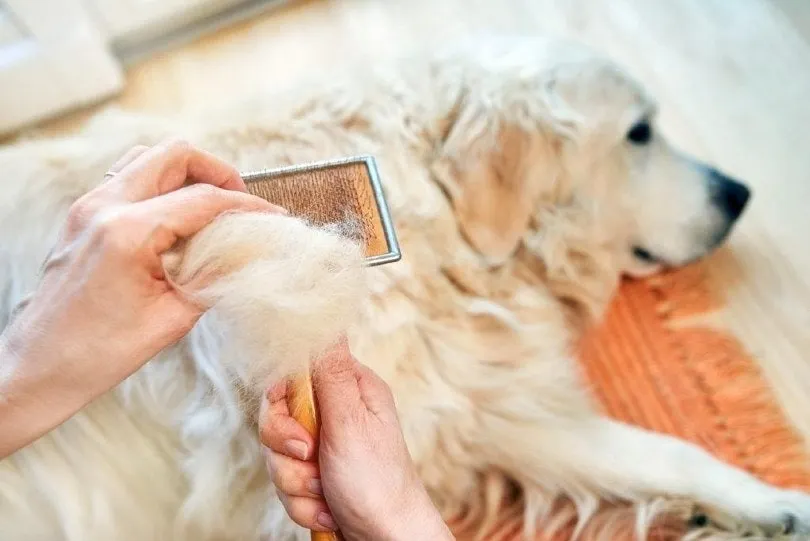
You can’t stop Golden Retriever shedding — and frankly, you wouldn’t want to. Shedding is a healthy biological process. But you absolutely can control how much of that hair ends up in your house. Here’s what actually works:
This is the single most effective thing you can do to manage Golden Retriever shedding. Regular brushing catches loose hair before it lands on your furniture. During heavy shedding seasons, daily brushing isn’t overkill — it’s essential. The AKC recommends daily brushing during peak shedding seasons for double-coated breeds like the Golden.
Skip the basic pet store brush. For a Golden Retriever’s double coat, you need:
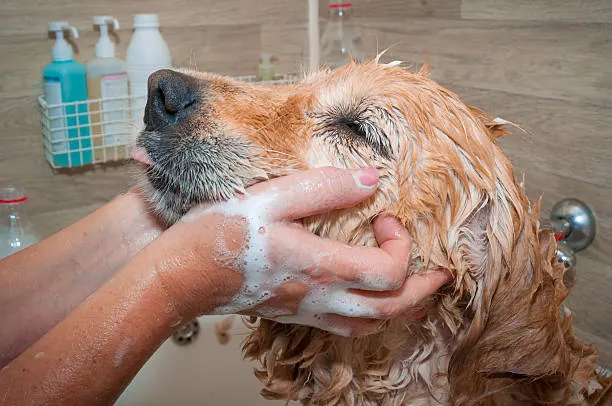
Bathing loosens dead hair and washes it away before it sheds onto your couch. Use a gentle dog shampoo — over-bathing strips natural oils and can actually increase shedding by drying out the skin.
This is huge and often overlooked. A diet rich in omega-3 and omega-6 fatty acids dramatically improves coat health and reduces excessive shedding. Look for foods with named meat as the first ingredient, real fish or fish oil, and no fillers. You can read more about how nutrition affects coat health from Tufts University’s Cummings Veterinary Medical Center. (We’re also happy to share what we feed our Goldens — see our recommended dog food page.)
Even if you’re feeding premium food, a daily fish oil supplement can make a visible difference in coat thickness, shine, and reduced Golden Retriever shedding within 4-6 weeks. The American Kennel Club covers fish oil benefits for dogs in detail. We carry quality coat-supporting supplements in our Golden Store if you’d like a vetted starting point.
A professional groomer with a high-velocity dryer can blast out loose undercoat in a single session — equivalent to weeks of home brushing. Schedule appointments at the start of spring and fall coat blows.

This is one of the biggest mistakes new Golden owners make, and it deserves its own section.
Shaving a Golden Retriever does not stop shedding — and it can actually harm your dog.
The double coat is a temperature regulation system. It keeps your Golden warm in winter AND cool in summer (the undercoat traps cool air against the skin). Shaving removes that built-in air conditioning and exposes pink skin to direct sunlight, which can cause sunburn and even skin cancer. The ASPCA strongly recommends against shaving double-coated breeds for exactly this reason.
Even worse, when shaved fur grows back, it often grows back unevenly — and it’ll still shed exactly the same amount. You’ll have a sunburned, patchy-looking Golden who is shedding just as much as before.
Trim feathering on the legs, ears, and feet for tidiness if you’d like. Never shave the body.
Most Golden Retriever shedding is normal. But call your vet if you notice:
These can be signs of allergies, thyroid issues, parasites, or skin infections — all very treatable, but worth checking out. The Merck Veterinary Manual’s overview of hair loss in dogs is a helpful reference if you want to dig deeper.

If you bring home a Golden Retriever, you’re bringing home a shedding dog. Period. There’s no Golden Retriever that doesn’t shed, and any breeder who tells you otherwise isn’t being honest.
But with the right grooming routine, the right diet, and a good vacuum, Golden Retriever shedding becomes just another small, manageable part of life with one of the best family dogs in the world. And honestly? After a few months, you stop noticing the hair on your sweater. You just notice the dog who loves you more than anything in the world.
That’s a fair trade.