
Dry dog paws are what we are watching for on the farm this fall. The ground has stayed dry, the nights are getting cold, and the heat is coming on in the house, so the dogs spend their days going back and forth between cold dry air outside and warm dry air inside. Here is what you can do to help to prevent dry dog paws!
The pads on a dog’s foot are skin, and they dry out the same way your hands do. The AKC points to dry indoor air and cold outdoor air as the two things that crack a dog’s pads. Add a summer and fall of running over stubble, gravel and hard packed ground, and a pad that felt fine in August can be rough and split by November. Run your thumb across each pad once a week. A healthy pad feels firm and a little leathery. A dry one feels rough or scaly, and a crack shows up as a thin line that opens when the toes spread.
If the pads feel rough, massage a paw balm or paw wax into them a few times a week. VCA Animal Hospitals recommends the same for chapped pads, and the same balm works as a barrier once the snow and road salt arrive. Use one made for dogs. Every dog licks its feet, so whatever goes on the pad ends up in the dog. Bedtime is a good time to do it, when your golden is lying still and will not walk it straight off across the floor.
A golden grows a tuft of hair between the pads. In the fall it collects burrs, dry leaves and bits of stick, and once it mats into a hard little lump your dog is walking on that lump all day. Keeping it trimmed level with the pads lets you actually see the skin when you check for dryness, and it gives your dog better grip on a smooth kitchen floor.
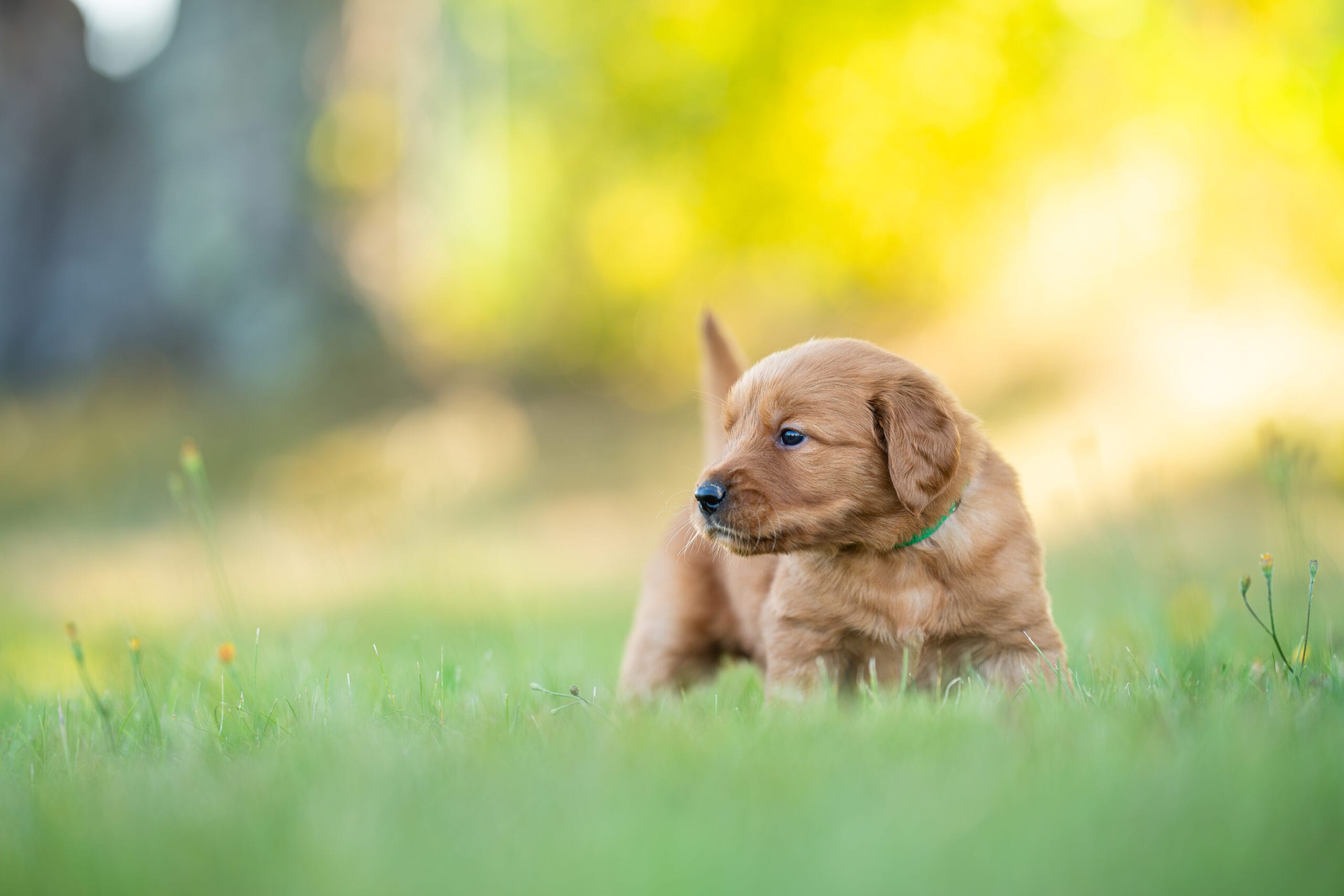
Limping, a foot that is swollen or hot, a smell coming off the paw, a crack that bleeds or keeps opening back up, or steady licking at one spot for more than a day or two all want your veterinarian. Treatment decisions belong with your family and your own vet every time.
A golden whose feet have been handled since puppyhood will lie still and let you do all of this, which is the best reason there is to start early. Our summer paw care tips cover hot pavement and sand, and if a golden of your own has been on your mind, our reserve a puppy page is the place to start. A weekly look at dry dog paws takes five minutes!