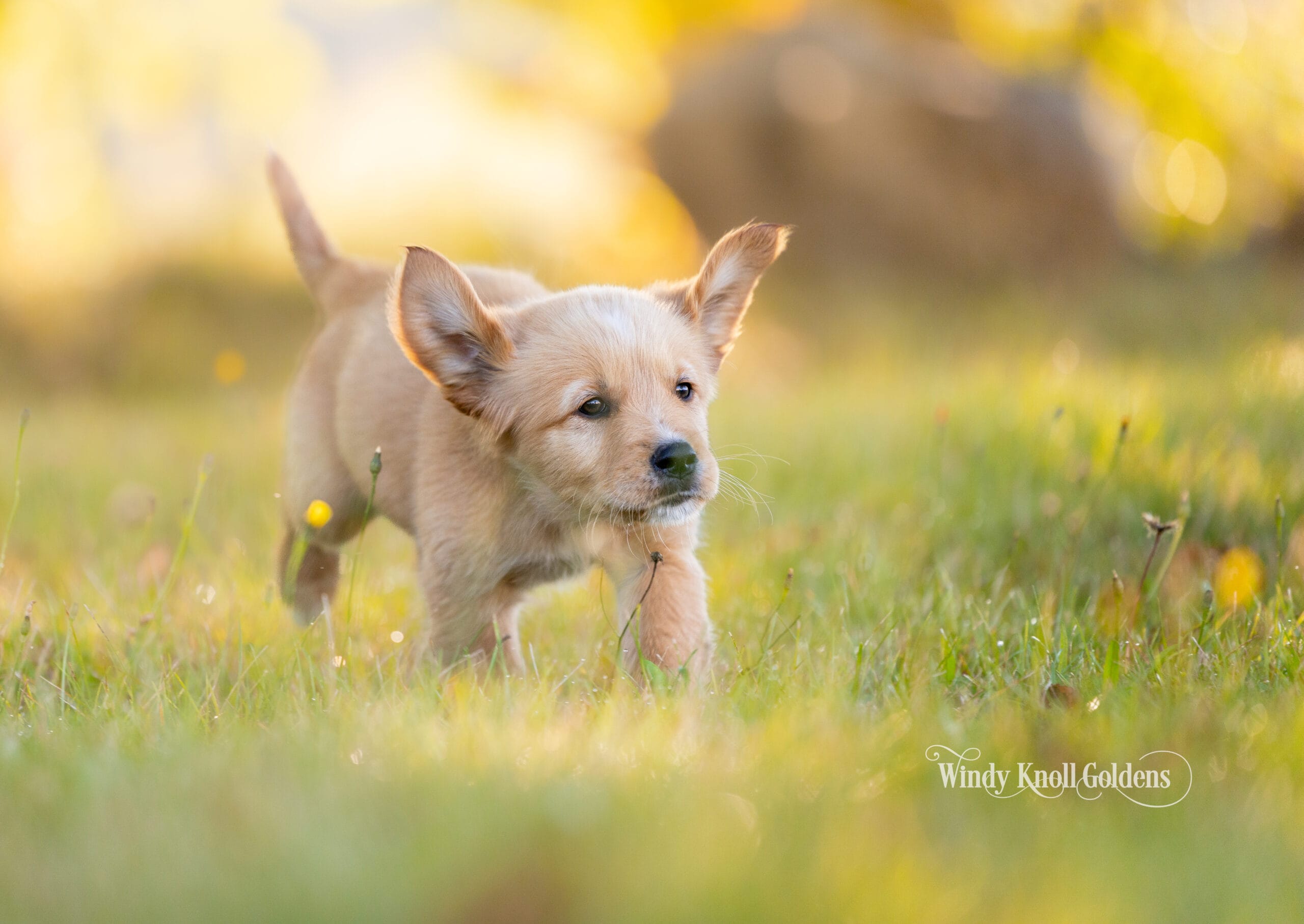
We live in a house and on a farm full of animals, so introducing a puppy to your dog is something we watch happen over and over again. Almost every rocky start we have seen came from doing it too fast in the front hallway on go home day. Slow it down and most of the trouble simply never appears!

Your resident dog has an opinion about the front door, and a stranger arriving through it is the worst possible framing for a first meeting. Have someone else hold the puppy while you greet your dog normally, then move the whole thing outside.
A driveway, a quiet corner of a park, or even a neighbor’s stretch of lawn beats the living room. The American Kennel Club says the same thing in its guidance on introducing a new dog to your current dog, and it is the single highest value five minutes in this whole process. Walk them parallel to each other at a distance before anybody sniffs anybody.
Puppies have no manners. That is not a flaw, it is just their age. An adult dog who curls a lip or turns away is teaching, not attacking, and if you scold your older dog for that you take away the only tool they have for saying no politely. Step in when the puppy will not take the hint, which is the actual problem in nine out of ten cases.
Watch for a loose body, a wagging tail that moves the whole back end, and a play bow. Those are good. A stiff body, a hard stare or a tail held high and still means give them more room and try again later.
This is the step people skip and regret. Your adult dog needs a room, a bed or a crate the puppy simply cannot reach, and they need it from day one. A baby gate across a doorway does the job. A dog who knows they can leave is far more generous about the ten hours a day they choose to stay.
The same goes the other way. Crate time is not a punishment for the puppy, it is how everybody gets a break, and a puppy who has somewhere of their own to go is a puppy who settles faster.
Food bowls in separate rooms for the first few weeks, no exceptions. Chews and bones put away unless the dogs are separated. Most fights between a resident dog and a new puppy happen over a resource, and a resource that is not lying on the floor cannot be fought over. Add them back slowly once the two of them are genuinely comfortable.
Cats want height and an exit, and they want to make the approach themselves. Give the cat a high shelf and a gate the puppy cannot pass, keep the puppy on a leash indoors for the first several meetings, and let the cat come down in their own time. That can take a week or a month, and rushing it is what creates a cat who hides for a year.
Livestock is a leash conversation and stays a leash conversation for a long while. Goldens are gentle by nature, but a puppy who learns that chickens run is a puppy who will chase chickens for the rest of their life, and that is a habit far easier never to start than to fix.

Day one is polite and a little tense. Days two and three are usually the hardest, because the puppy has recovered their nerve and become extremely annoying. By the end of the first week most pairs have found a rhythm, and somewhere in the second or third week you will look up and find them asleep against each other, and that is the whole thing done.
If it is genuinely not going well after a couple of weeks, or if you see real aggression rather than grumbling, get a trainer or your veterinarian involved early rather than waiting it out.
Introducing a puppy to your dog is mostly patience, and goldens make it easier than most. If you have one coming home from us soon, our puppy go home day checklist covers the rest of that first week, you can meet our own dogs on our dogs page, and everything on the ground right now is on our current litters page.