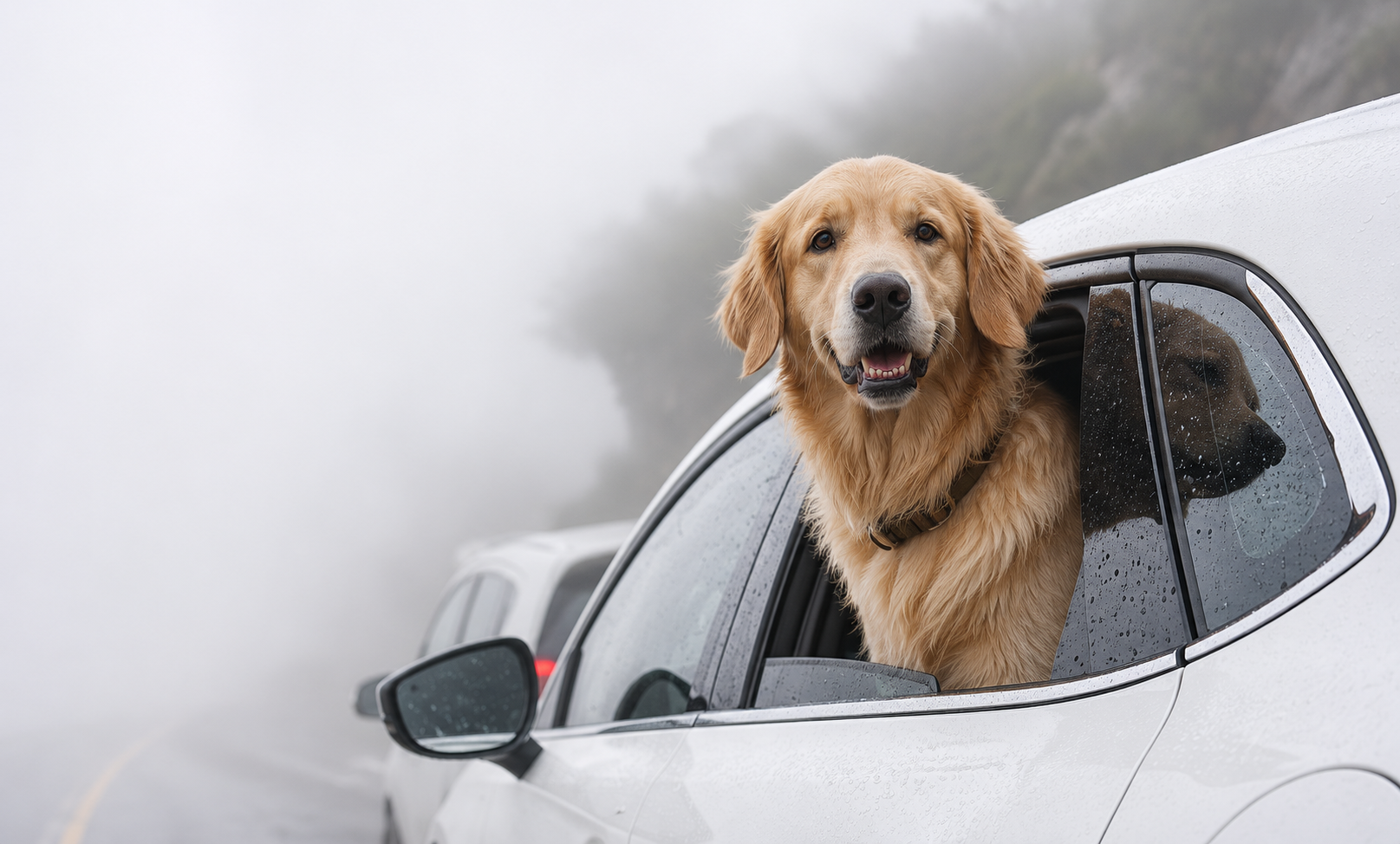

Puppy car anxiety is one of the things new families ask us about most after go home day. A puppy who cries, drools or gets sick in the car is dealing with an upset stomach and something brand new, and both of those get better with practice. Here’s how to help your golden retriever puppy learn to ride calmly.
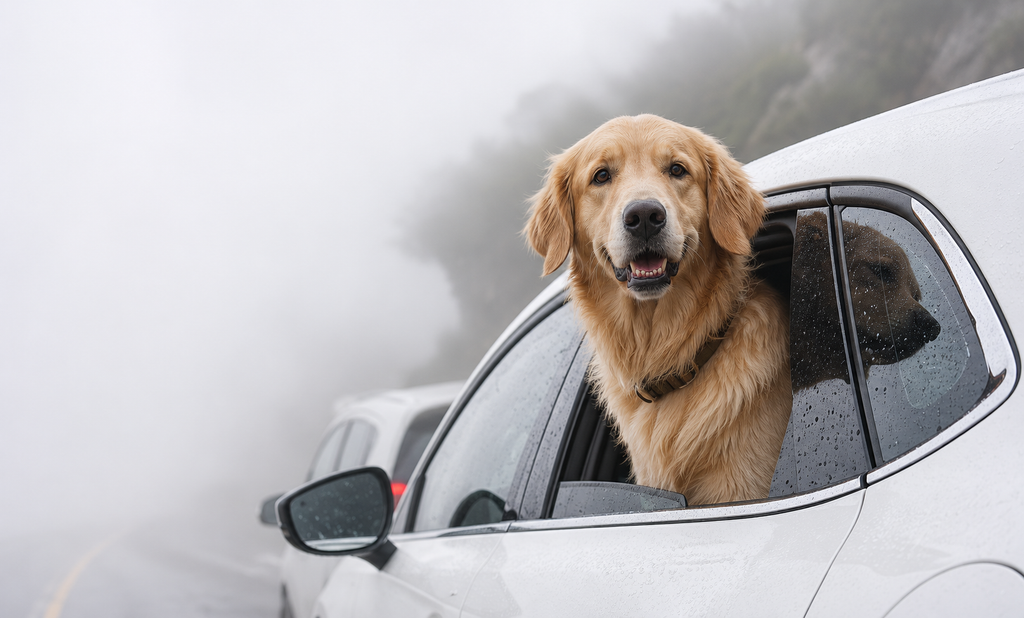
Puppy car anxiety usually comes from two things. The first is motion sickness. The balance system in a young puppy’s inner ear is still developing, and VCA Animal Hospitals notes that puppies will often outgrow motion sickness by the time they are about a year old. The second is fear. A puppy who has only been in the car a few times, and maybe got sick on one of those rides, starts to expect the car to feel bad.
Drooling, yawning, lip licking, panting, whining and trembling can come from either one. The steps below help with both.
Put your puppy in a crate that’s strapped down in the back seat or cargo area, or in a crash tested harness clipped to a seatbelt. A puppy on a lap slides around with every turn, and the front seat isn’t safe because of the airbag. A light blanket over the crate cuts down on the motion your puppy sees out the window. Add an old towel and something that smells like home. And never leave your puppy alone in the car, summer or winter.

Skip food for two or three hours before a drive. Small sips of water are fine. Crack a window for fresh air, keep the car cool, and take turns and stops gently. If your puppy still gets sick on most rides, ask your vet about an anti nausea medication. Many families use one for the long drive home.
This is the part that makes the biggest difference. Be patient and go at your puppy’s pace, and only move to the next step once they’re relaxed at the one they’re on.
Several short rides a week do more than one long drive on the weekend. If your puppy drools or whines at a step, go back to the one before it next time.
Give quiet praise or a treat when your puppy settles and lies down. When they whine or bark, wait it out. Talking to a fussing puppy or reaching back to comfort them can teach them that fussing gets attention. As soon as you get a few seconds of quiet, reward that.
If every ride ends at the vet, your puppy will figure that out quickly! Mix in trips that end somewhere fun, like a quiet walk, a friend’s yard, or just home again with a treat. Until vaccines are finished, pick quiet spots where other dogs don’t gather. When your golden is ready for longer drives, our road trip guide covers stops, packing and hotels.
If you’re waiting on a puppy from one of our current litters, now is a great time to get the crate set up in the car for the drive home!