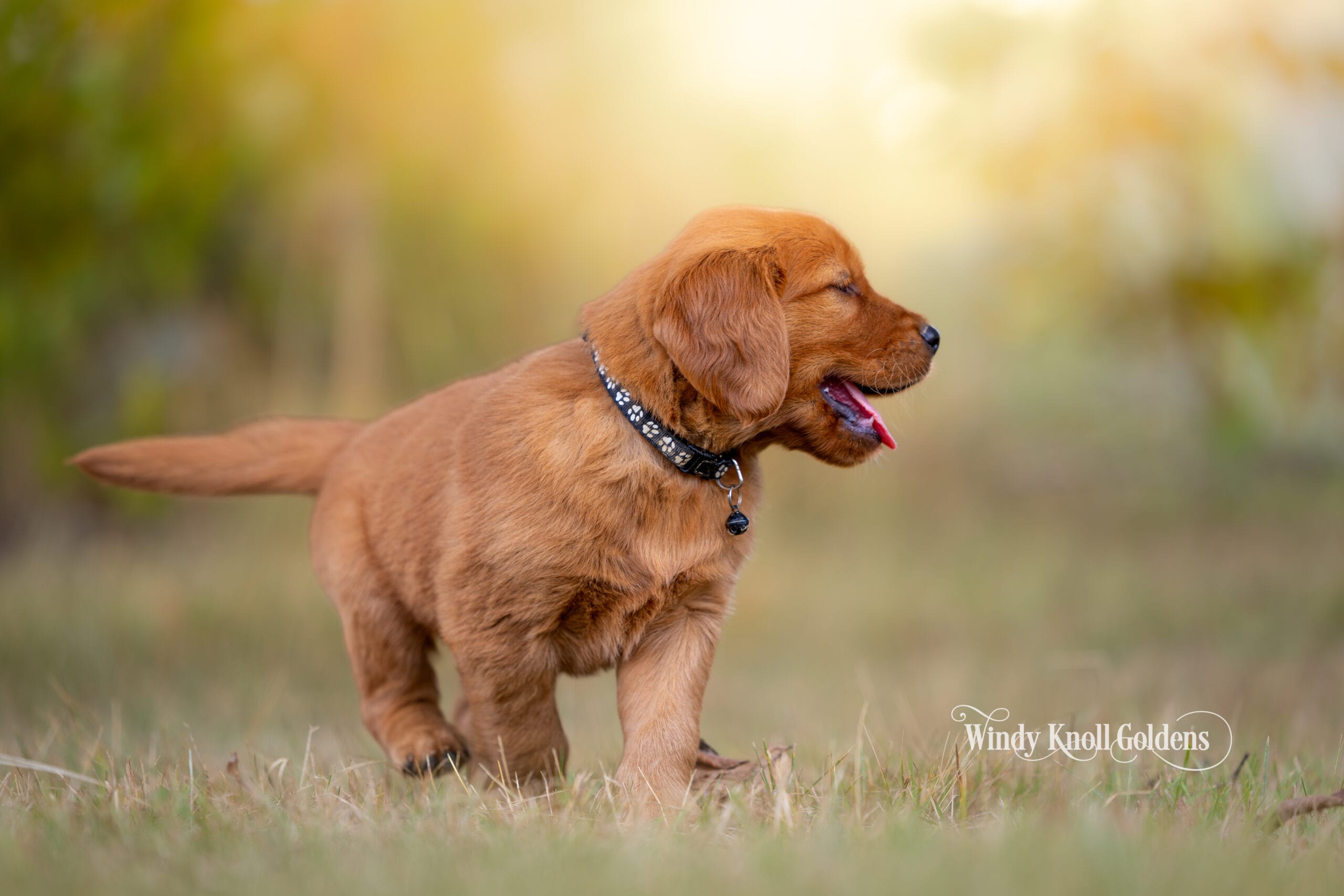

If you have ever wondered when do golden retrievers calm down, you are in very good company. Almost every new owner asks it, usually around month eight, covered in mud, holding a chewed shoe. Goldens are loving and gentle, but they are also a sporting breed built for all-day energy, and that spark takes real time to settle. The good news: it does settle, and there is a clear timeline you can count on. Below we break the golden’s energy into four honest stages, from wild puppy to mellow adult, and share simple ways to help your dog find calm a little faster.

Do Golden Retrievers Ever Calm Down?
Yes — but not overnight, and not by accident. Goldens were bred to retrieve birds across fields and water for hours, so high energy is baked into who they are.
That means calm is partly a matter of age and partly a matter of the routine you build. A golden with enough exercise, training, and structure will settle far sooner than one left to figure it out alone. Understanding the stages ahead makes the wild months much easier to enjoy.

Here is the honest answer most owners are looking for: most golden retrievers begin to noticeably calm down between two and three years of age, with the biggest shift often around the second birthday.
Some mellow earlier, some later, and personality plays a big role. According to the American Kennel Club, goldens mature slowly and stay playful well into adulthood. So when people ask when do golden retrievers calm down, the real answer is a gradual slope, not a switch — one that runs through the four stages below.

The puppy stage is adorable chaos. Expect short bursts of intense energy followed by hard naps, plus plenty of biting, chewing, and exploring.
This is not the hyper stage people warn you about — that comes next, which is why owners rarely ask when do golden retrievers calm down until a bit later. Right now your job is foundation: gentle training, potty routines, socialization, and lots of sleep, since puppies need 18 to 20 hours a day. Building good habits now pays off enormously later.
Welcome to the stage that makes owners ask when do golden retrievers calm down. Adolescence is the peak of the energy curve, and it can test your patience.
Your sweet puppy may suddenly “forget” training, ignore recall, and bounce off the walls. This is completely normal. Their body is nearly full-sized but their brain is still catching up. Consistency is everything here — keep training short, positive, and daily, and do not take the selective hearing personally.
This is where the magic starts. Somewhere between eighteen months and three years, most goldens begin to string together calmer, more focused stretches.
By now, the question of when do golden retrievers calm down starts to answer itself. You will notice longer settles on the floor, better impulse control, and a dog that finally reads as “grown up” more often than not. The energy is still there when you want it, but the frantic edge fades. All the training you banked earlier now clicks into place.


By around age three, most goldens reach a comfortable, steady rhythm. They still love a hike, a swim, and a game of fetch, but they are just as happy napping at your feet afterward.
This is the golden everyone pictures: gentle, patient, and wonderfully calm. It is worth every muddy month it took to get here. Keep in mind that goldens stay playful for life, so “calm” means balanced, not couch-bound.
Age does most of the work, but your daily choices make a real difference. If you keep asking when do golden retrievers calm down, the habits below genuinely help a golden settle sooner.
Give plenty of physical exercise, but pair it with mental work — puzzle toys, training games, and sniff walks tire a golden far more than a run alone. Keep a predictable daily routine, reward calm behavior instead of only reacting to the wild moments, and make sure your dog gets enough sleep. Overtired goldens act more hyper, not less. Good nutrition supports steady energy too; see our golden retriever feeding guide for what we feed our dogs.
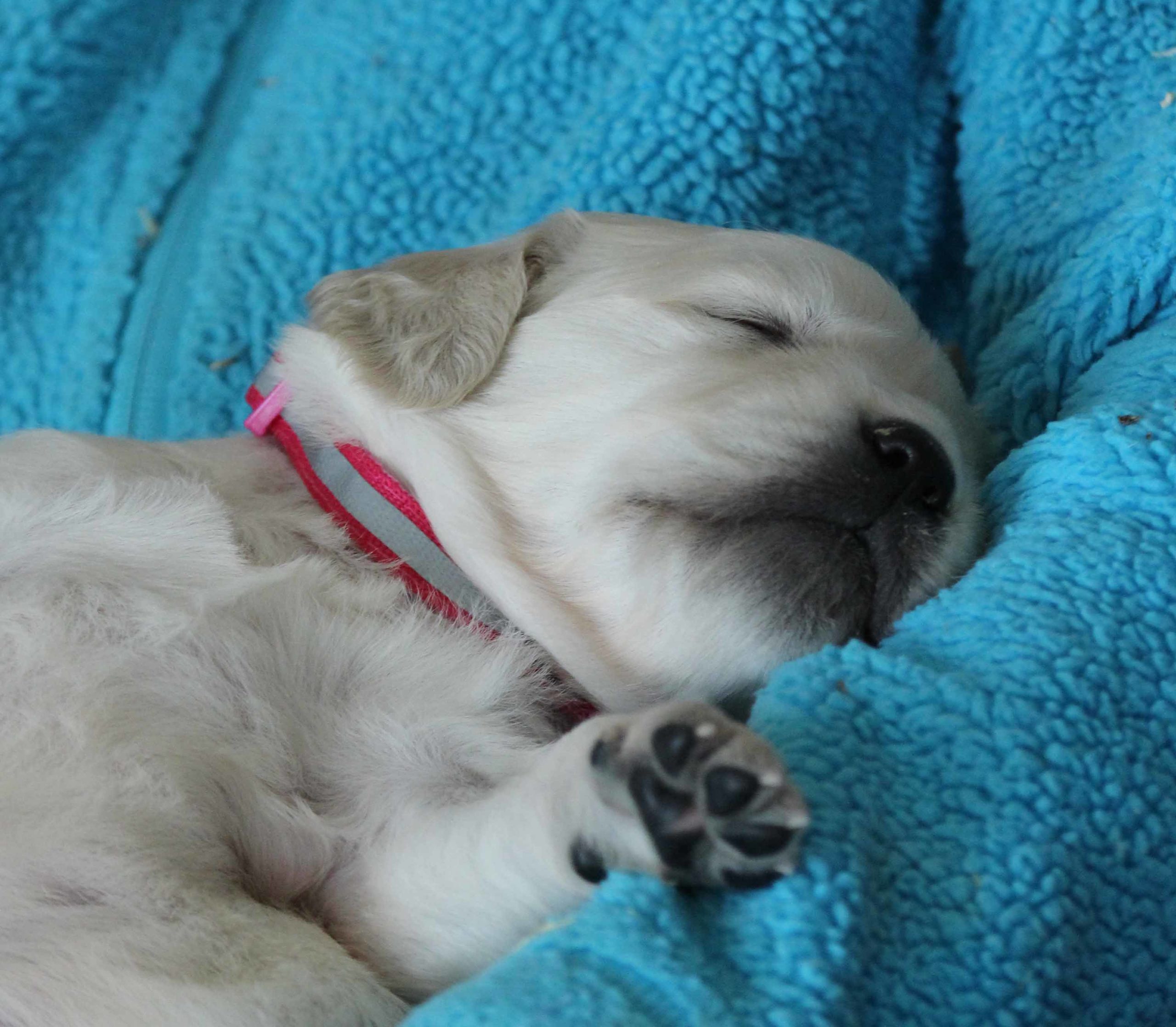
Most calm is a welcome milestone. But a sudden drop in energy is different from slowly maturing and is worth a second look.
If your golden becomes lethargic overnight, loses interest in food or play, or seems unusually withdrawn, call your veterinarian. Sudden lethargy can signal illness, pain, or thyroid issues, which are not uncommon in the breed. Knowing your dog’s normal makes it easy to spot when something is off.
So, when do golden retrievers calm down? Gradually, through four stages, with real settling usually arriving around two to three years old — and a little help from you along the way. The wild puppy months fly by faster than you think, and the gentle, devoted companion waiting on the other side is worth every bit of the wait.
Dreaming of a golden of your own? Learn how we raise calm, confident pups with early puppy socialization, meet our dogs, and see our current litters. Have a question about golden retriever energy? Contact us anytime, Windy Knoll Goldens is just four easy hours north of Boston in beautiful central Maine.