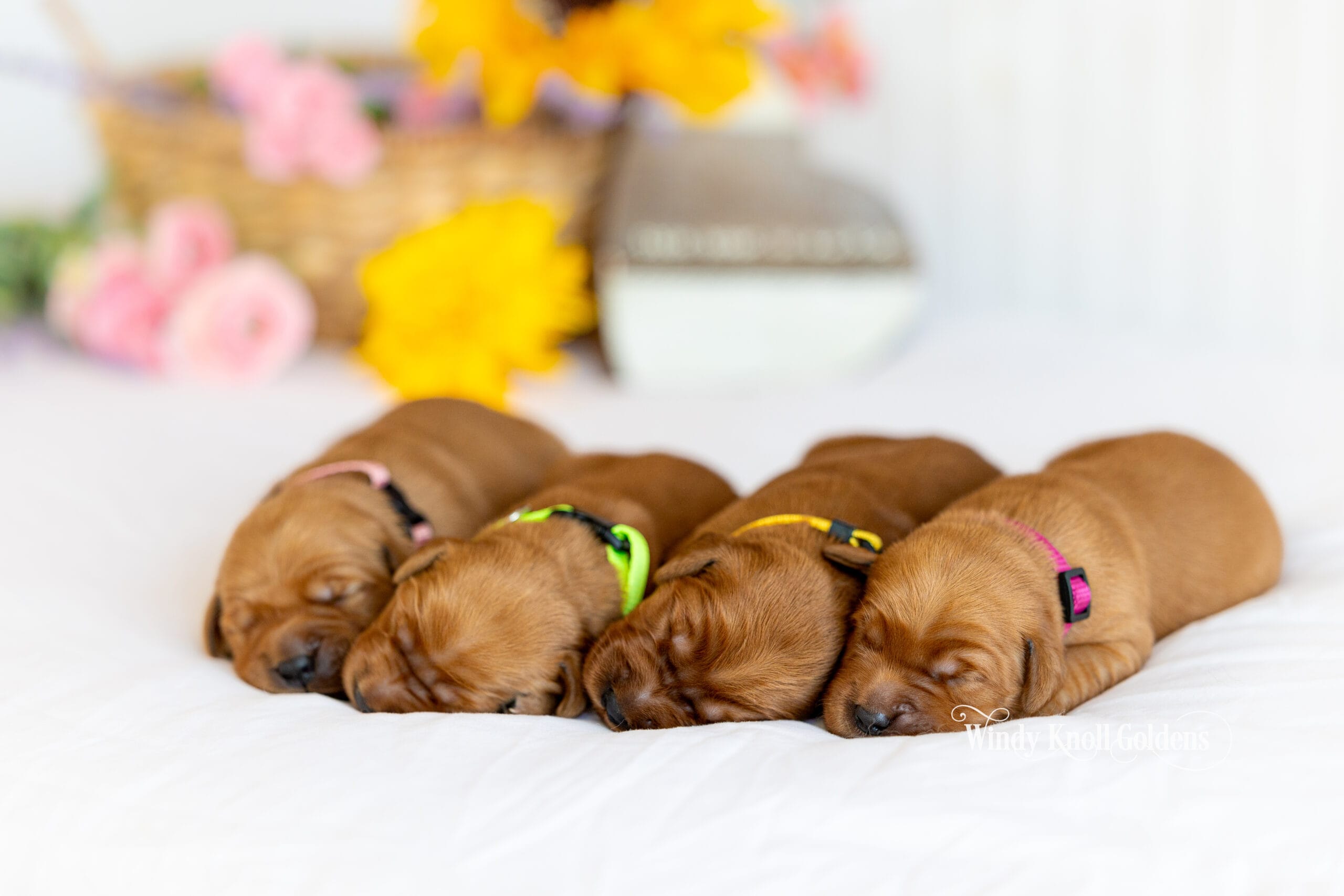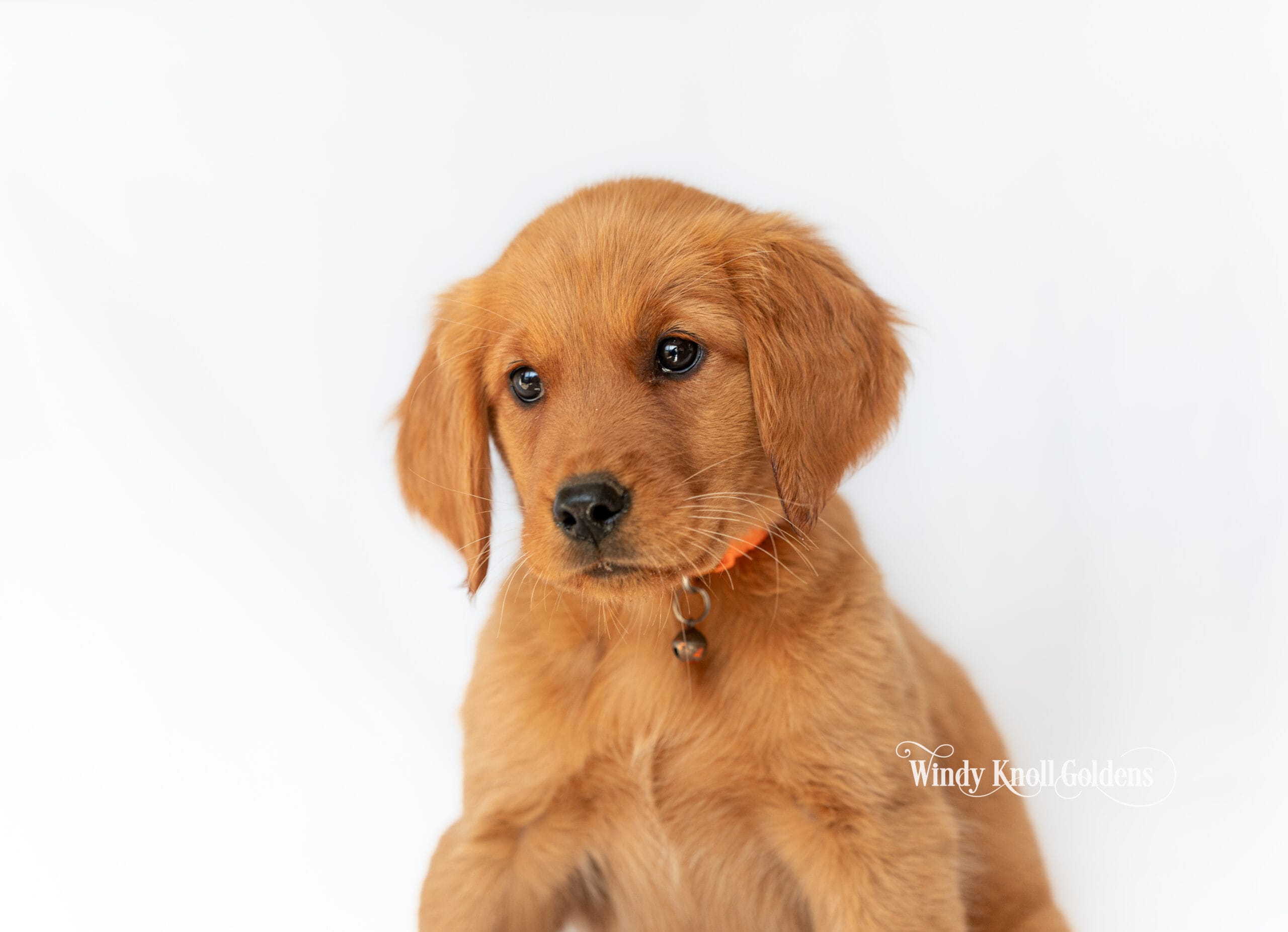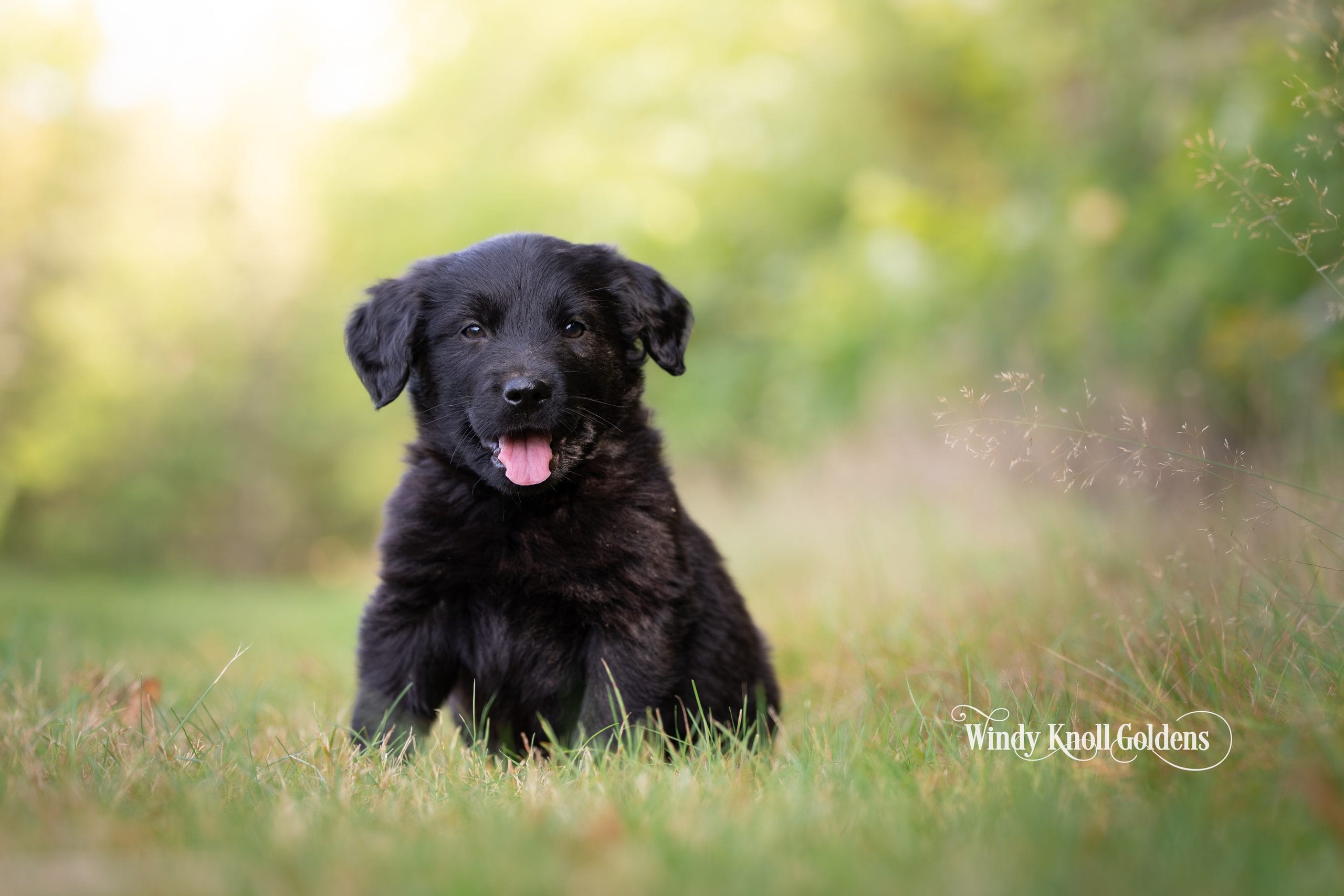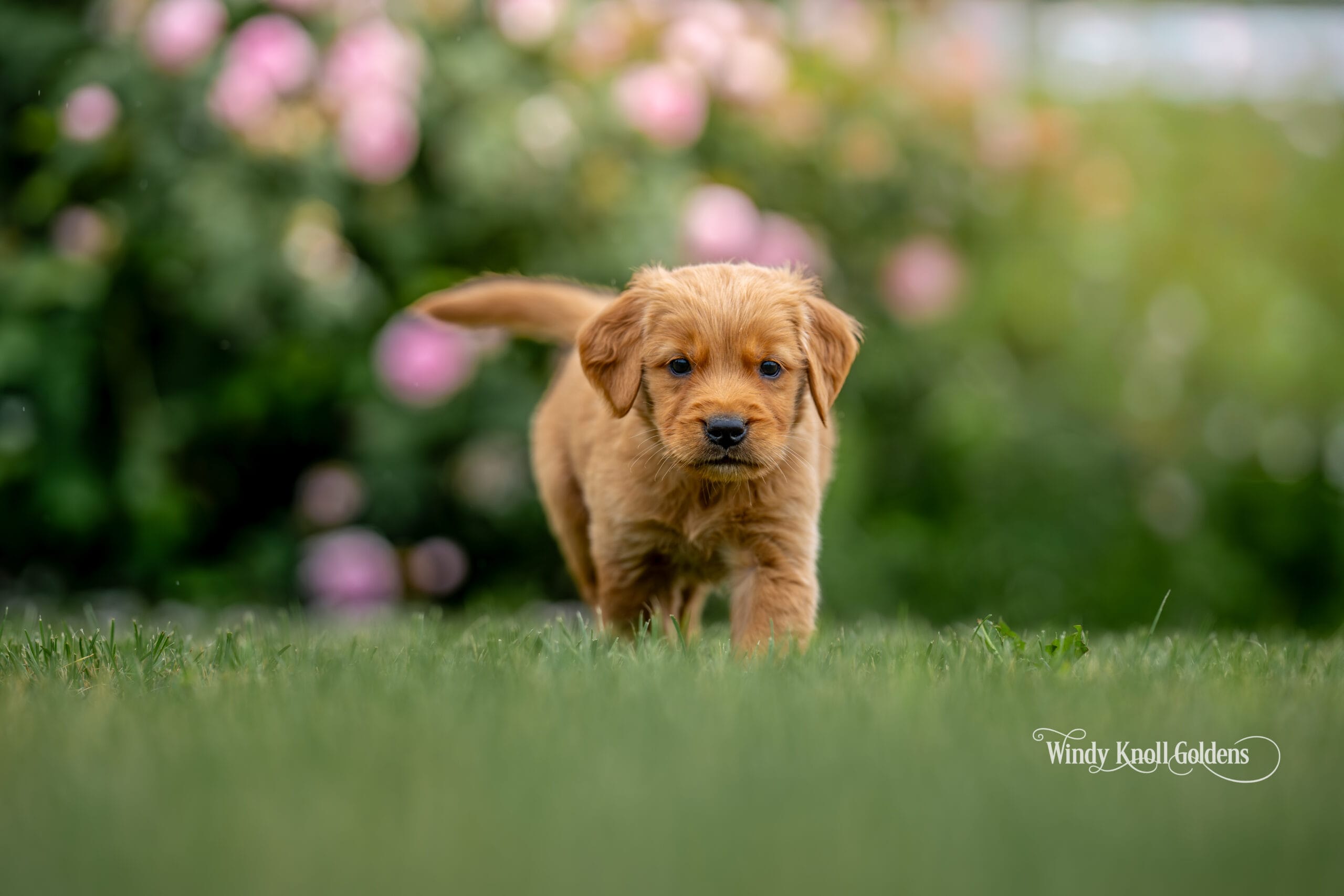

Food is the question we hear most in the first week after a puppy goes home! Everybody wants to get it right, and a good golden retriever puppy feeding schedule is a lot simpler than the internet makes it sound. Here’s what we do here on the farm, and what we tell our families to do once they get home.
Our puppies are raised on Wholesomes dog food, and we require all of our puppy families to stay on Wholesomes for a while. A puppy leaving here is already dealing with a car ride, a new house, new people, new smells and no littermates, and a new food on top of all that is one change too many. Keep them on what they know for at least the first month or two while everything else settles, and then you can switch later if you’d like.
Every puppy bowl here also gets a little Longevity and MSM sprinkled on top, and our puppy health guide walks you through keeping that going at home.
Young puppies have small tummies and huge energy needs, so they eat little and often. The American Kennel Club’s puppy feeding fundamentals lays out the same pattern we use, and it goes roughly like this.
Sticking to set meals is important in a puppy feeding schedule. It makes house training so much easier, because a puppy who eats on a schedule also goes potty on a schedule, and it lets you notice right away if your puppy goes off their food.
When you do decide to switch, take it slow. Seven to ten days is the rule we give our families. Start with about a quarter new food and three quarters of what they’re used to, hold there for two or three days, then move to half and half, then three quarters new, then all the way over. If loose stool shows up, go back a step and stay there a little longer. There’s no prize for rushing it! We’ve written more about this in our post on avoiding tummy troubles with a new puppy.
Start with the amount on the bag for your puppy’s age, then adjust to the puppy in front of you. Run your hands along their ribs. You want to feel them easily under a thin layer, the way you feel your own knuckles. If you have to press to find them, cut back a little.
This matters even more in a golden. A big puppy who grows too fast carries extra weight on joints that are still soft, and slow, steady growth is one of the best gifts you can give them for a long, comfortable life. A roly poly golden puppy is adorable, and a lean one is set up for years of happy running around!

Keep fresh water down all day. Many families pick it up an hour or so before bed while they’re getting through the night waking stage. Keep treats to a small share of what your puppy eats in a day, because training treats add up faster than anyone expects. And go easy on table scraps in the first month, since a puppy who’s adjusting to a new home doesn’t need a new diet on top of it.
If your puppy skips a single meal in all the excitement of that first week, that’s normal. If they skip two in a row, aren’t drinking, or have loose stool that won’t firm up, give your veterinarian a call.
That’s really all there is to it! Keep the food the same, keep the schedule steady, keep them lean, and a golden retriever puppy feeding schedule becomes second nature within a couple of weeks. If you’re bringing a puppy home from us soon, our puppy go home day checklist covers everything else about that first week, and you can see who’s growing up here now on our current litters page.