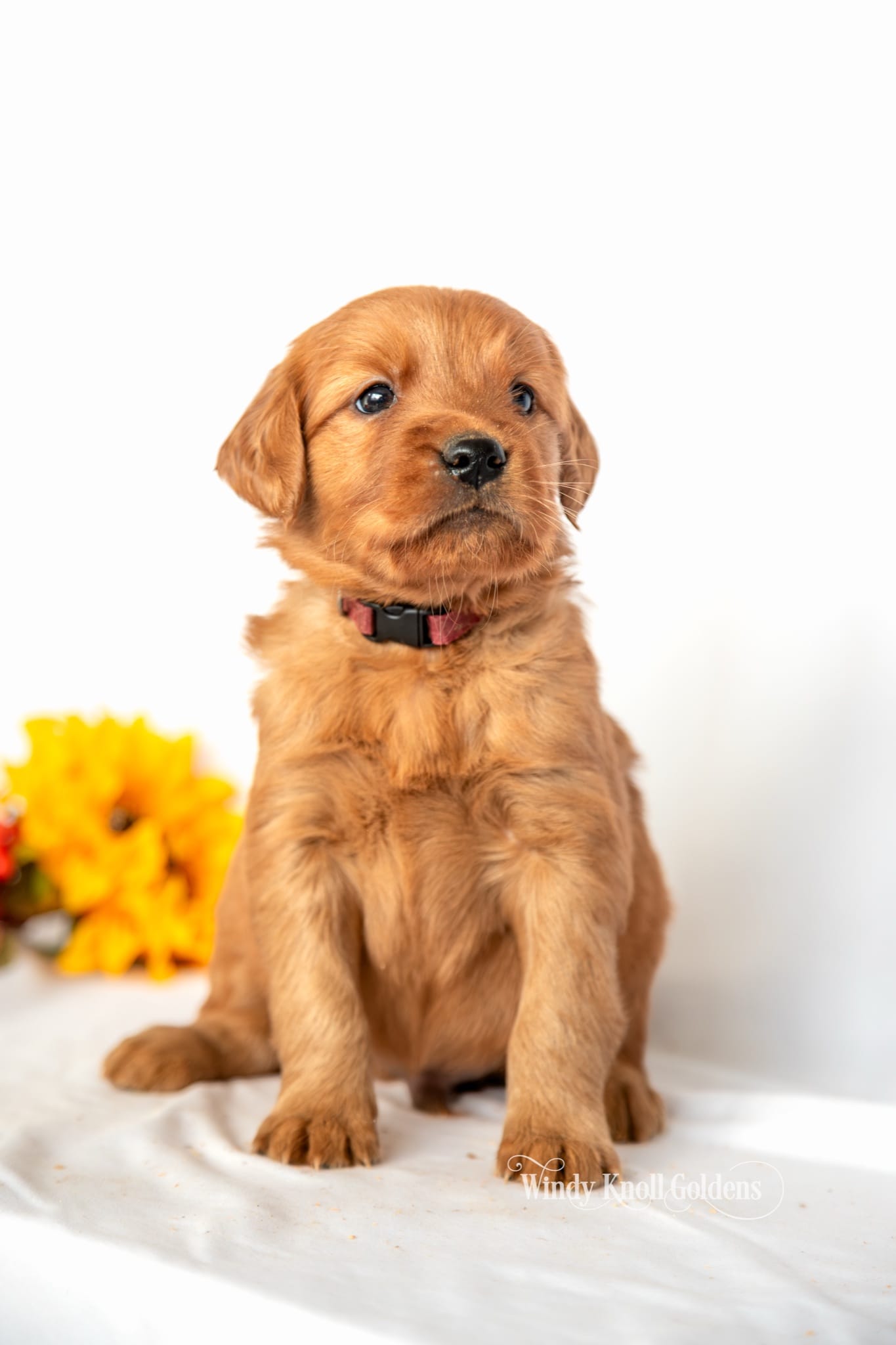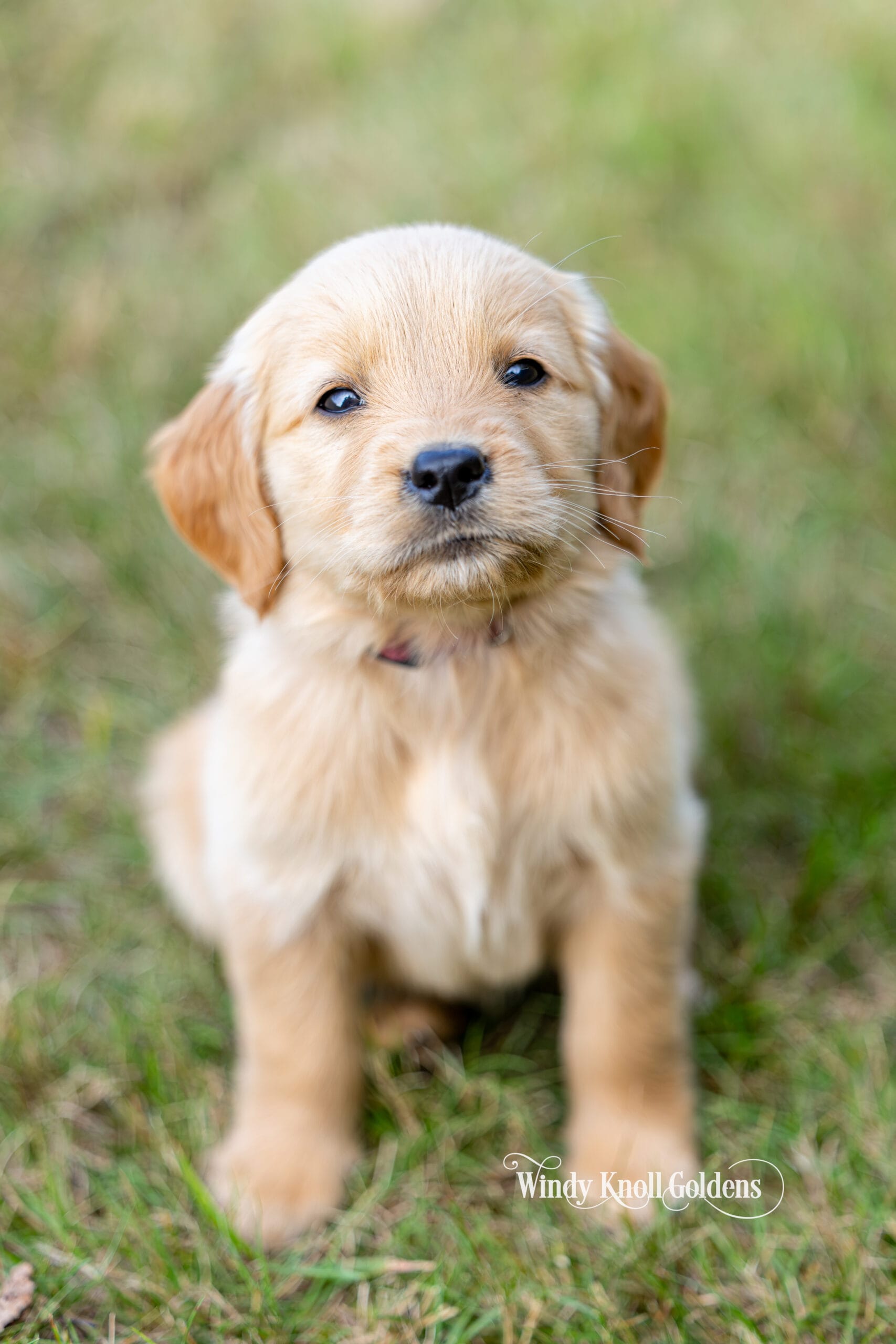

The first few days at home with your new puppy is an essential time to establish and start potty training. A puppy potty training schedule comes down to one idea: you take your puppy out before they have to ask. The American Kennel Club says housetraining should begin the day your puppy comes home, and most golden puppies come home right around 8 weeks old, when their bladder control is at its weakest. That makes the first few weeks a lot of trips outside, and this is the schedule and the set of habits that get you through them.
The UC Davis School of Veterinary Medicine gives a simple guide to how many trips outside a puppy needs each day:
At the top of that range you are heading outside every hour or two while your puppy is awake. The number drops on its own as their bladder muscles develop, so the early weeks are the hardest and they do not last.
The numbers tell you how many trips. These moments tell you when:
Most accidents happen in the minutes right after one of these. Get your puppy outside first and there is nothing to clean up. Keeping your puppy on a concise feeding schedule will help you know when they have to go potty depends on when they ate last.

Pick one spot in the yard and carry or walk your puppy straight to it, on a leash so you stay with them. UC Davis advises against playing with your puppy until they have gone, so they learn that the bathroom comes first and play comes second. It also warns against leaving a puppy outside alone, because you miss the chance to reward the right behavior the moment it happens.
Choose a short cue such as “go potty” and say it calmly while your puppy is going. When they finish, give a small treat and plenty of praise right then. A puppy connects the reward to what they just did, and a treat handed over after you walk back inside is too late to count.
Every puppy has a few tells, and the AKC lists the common ones:
When your puppy is loose in the house, UC Davis suggests a leash attached to your waist. They cannot slip around the corner to go somewhere you cannot see, and you catch the signs the second they start.
If you catch your puppy in the act, interrupt with a quick clap and carry them to the spot. If they finish there, reward them like they did it all along. If you find the puddle afterward, clean it up and say nothing. UC Davis is clear that punishing a puppy, even after you find the mess, does not work and can lead to bigger behavior problems later. Use an enzymatic cleaner on every accident. It breaks down the smell that tells a puppy this is a bathroom, and we run one in the kennel every day for the same reason. Accidents will happen, so plan on them.
The most common setback the AKC describes is a puppy who starts having accidents after getting more of the house. Start with one small, safe area such as the crate, a puppy pen or a bathroom, and open up the rest one room at a time once your puppy has gone a good stretch without an accident. UC Davis puts it plainly: incomplete housetraining is a leading cause of house soiling in adult dogs, so it pays to finish the job.
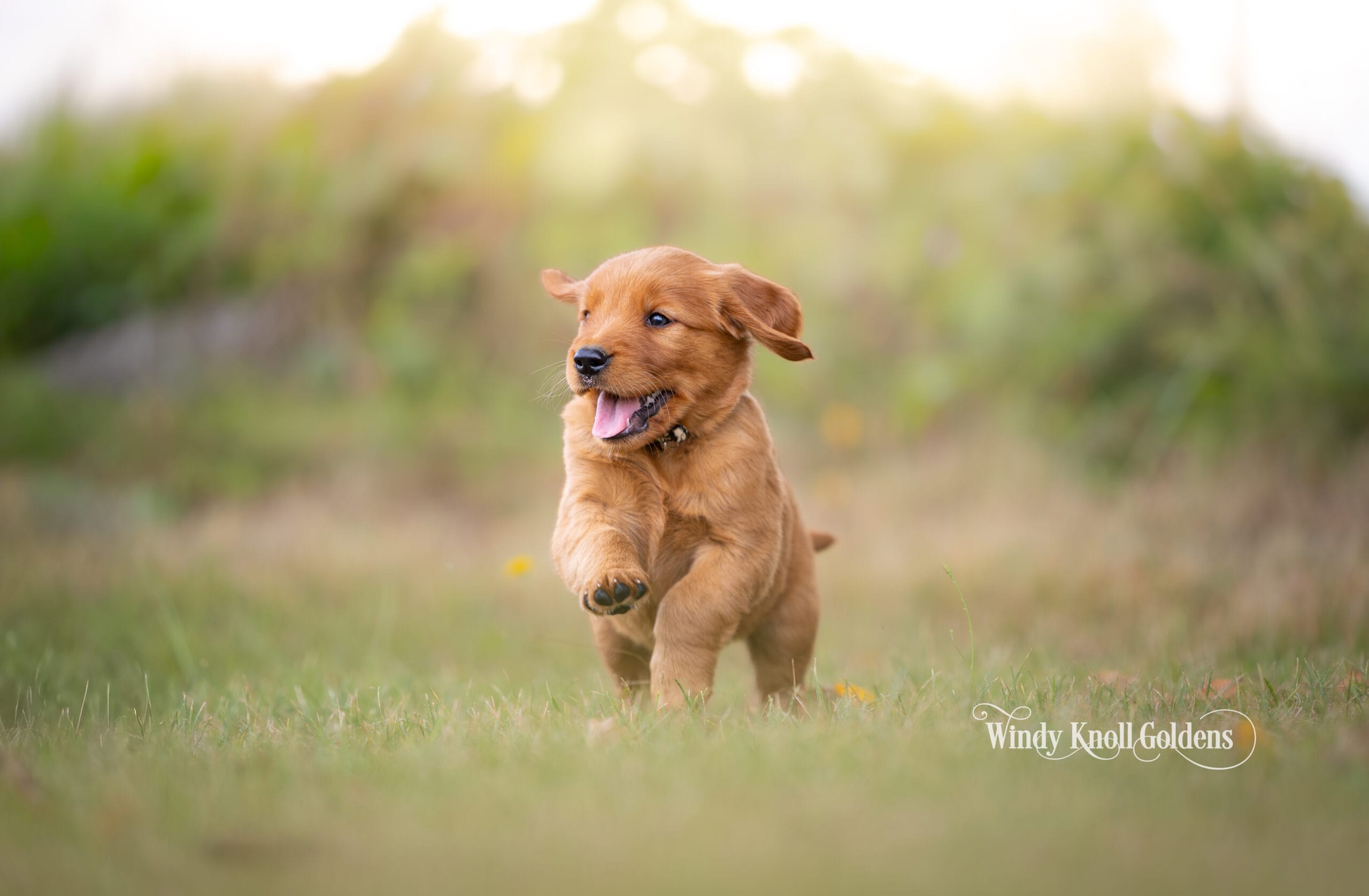
Nightime trips follow the same logic as the daytime schedule, and our guide to crate training a puppy at night walks through them.
Potty training and crate work run through every week of our optional training program. Puppies who stay on with us for training will come home already sleeping through the night in the crate with no accidents, and settling in at home usually takes three days to a week. Poppy’s six weeks show what that program looks like.
It varies. The AKC says some puppies build reliable habits within days and others need several weeks depending on age, past experience and how consistent the routine is. A fixed schedule and steady supervision shorten it.
Pads can help when nobody is home often or in severe winter weather. The AKC’s Dr. Mary Burch points out that they teach a puppy two options, the pad and the outdoors, so a golden puppy with a yard usually does best learning to go straight outside.
If a puppy is coming home soon, our puppy go home day checklist covers what to have ready, and you can see who is on the ground right now on our current litters page.