

ENS, early neurological stimulation, is a series of five gentle exercises we do with every one of our developing puppies. This beneficial therapy happens once a day, from Day 3 through Day 16; each exercise lasts 3 to 5 seconds and provides just the right amount of stimulation.
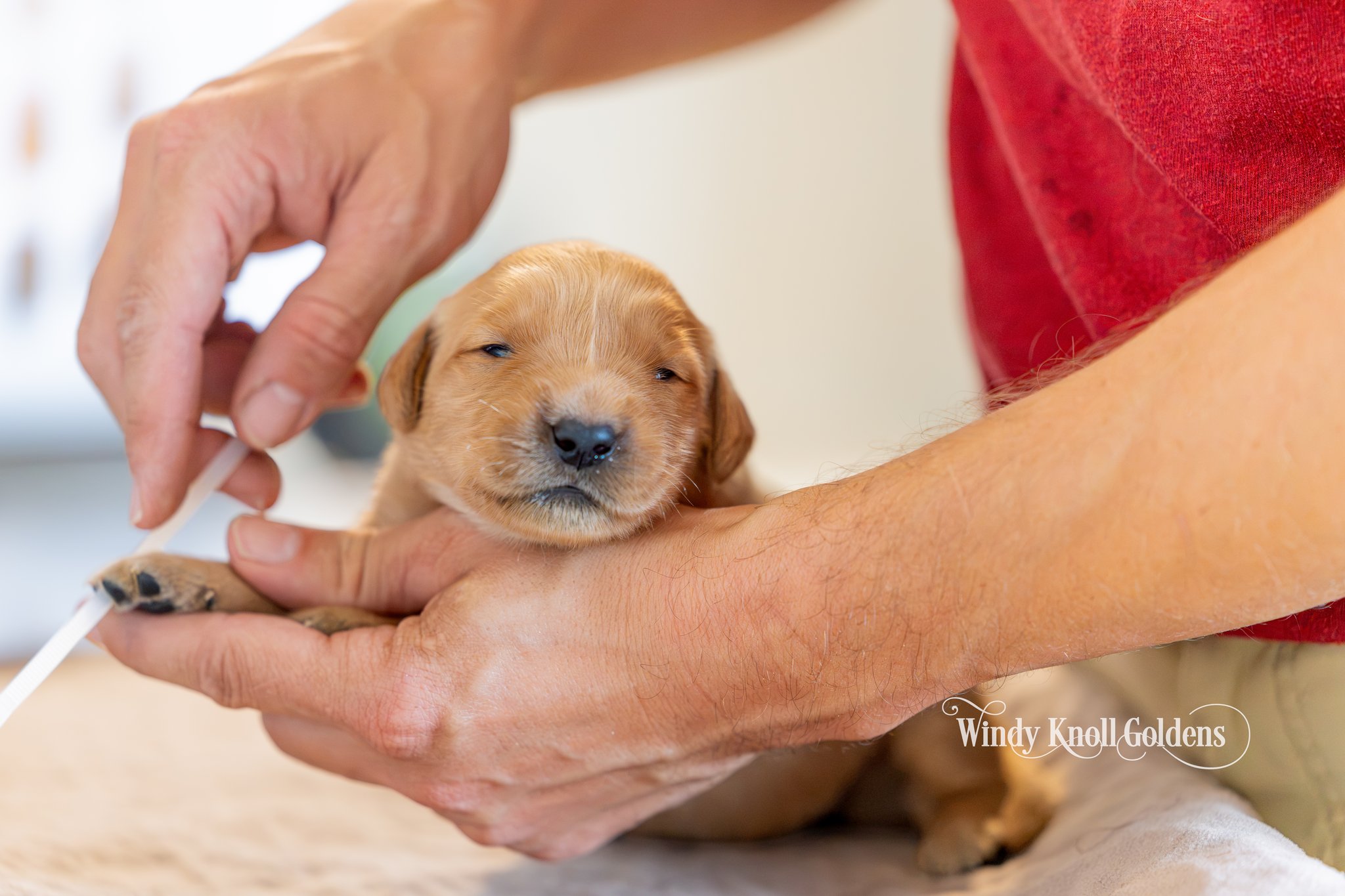
The U.S. military developed ENS to improve the performance of its K9 working dogs. Dr. Carmen Battaglia, a breeder, canine judge and AKC board member, introduced ENS to the wider dog breeding community.
We do each exercise once a day and never for more than 5 seconds. More is not better here. Too much stimulation at this age can do harm.
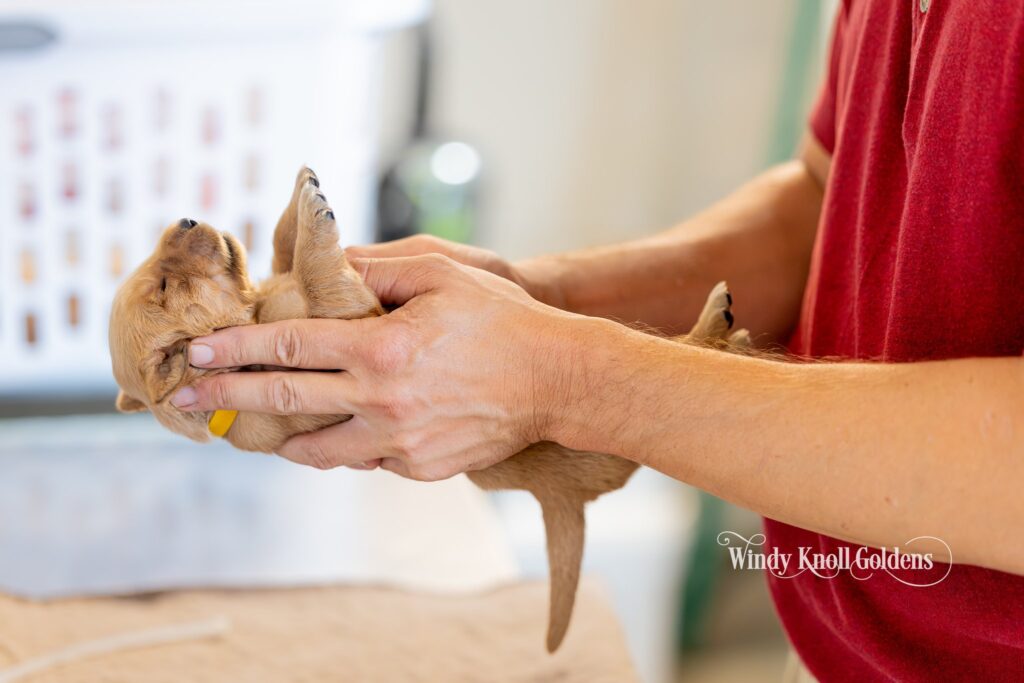

During the two weeks following birth a puppy’s brain and nervous system develop rapidly. However, at this stage, a puppy can’t see, hear or keep itself warm. Each ENS exercise introduces a safe micro stress that the puppy does not experience in the whelping box. This brief pressure activates the puppy’s stress response; it facilitates the link between the brain and the adrenal glands. Stress hormones are released and the body is prepared for neurological response. Repeating these brief micro stresses day after day during the puppy’s formative weeks develops robust neurological response to environmental stimuli.
Much of the science behind ENS started with lab rats. Researchers at Purdue’s College of Veterinary Medicine point out that rat pups handled early in life were much less fearful when exposed to a sudden noise, and had lower stress hormone levels when restrained by a person.
Dr. Battaglia reported five benefits in dogs that went through early neurological stimulation:
Those changes show up in behavior too. Dr. Battaglia reported that stimulated puppies were more active and more willing to explore than littermates who didn’t receive the exercises. A 2008 study in Applied Animal Behaviour Science on early gentling and the emotional development of puppies handled half of each litter daily from day 3 to day 21, and found the handled puppies were calmer at eight weeks old.
A 2022 study of working dogs found that dogs given ENS exercises as puppies were more likely to be accepted into working dog training than their littermates who weren’t. The researchers were careful about what that proves, and said the handlers knew which puppies had been through the exercises, which may have changed how those puppies were treated afterward. The honest summary is that the early research is encouraging and the long term picture is not settled.
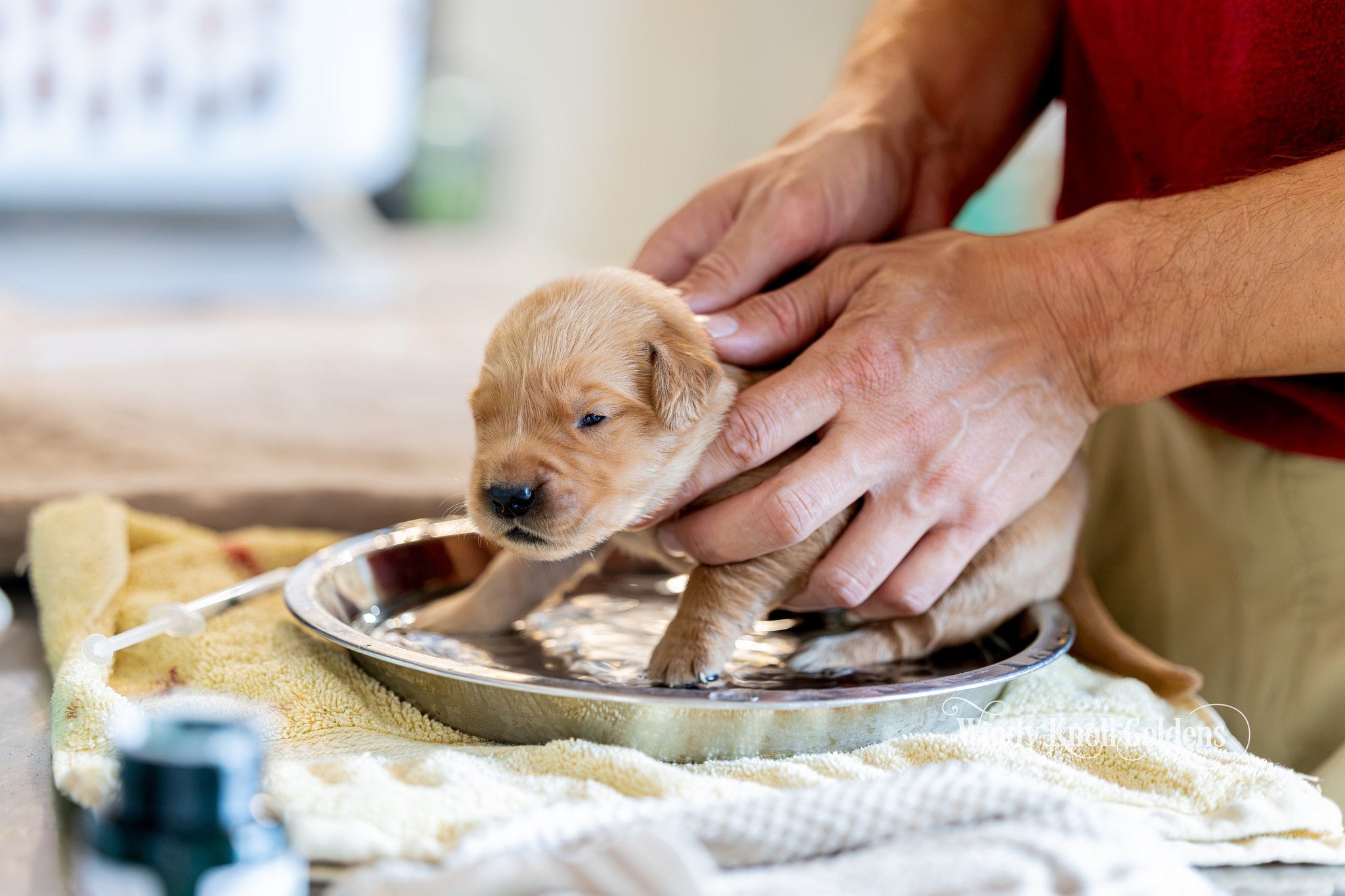
Days 3 through 16 are an important window of opportunity as a puppy’s nervous system develops. Once the eyes open and ears activate, the puppy starts learning from the world around it and interacting with new people, new sounds, new surfaces, and new movements. ENS comes to an end and socialization begins.
The exercises don’t replace cuddling. Our puppies are handled and loved on every day they’re here. You can watch Lucy and George’s puppies grow on their litter page, and our upcoming litters page shows which litters are coming next.